

DAIMLER Service Manuals PDF

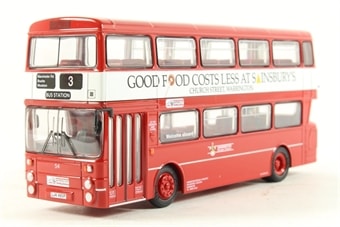
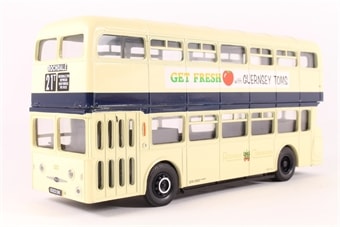
History of Daimler Buses
Some DAIMLER Double-Decker Bus Service Manuals PDF are above the page.
In 1890, Gottlieb Daimler in the district of Bad Kanstad (Stuttgart) founded the company of his name - "Daimler-Motoren-Gesellschaft", deciding to produce a four-wheeled car created by himself four years earlier and actively participating by Wilhelm Maybach. After a series of not very successful attempts, which nevertheless found their enthusiastic buyers, the designer Maybach succeeded in creating a successful model in 1901.
At the urging of the Consul of the Austro-Hungarian Empire in Nice and, in combination, the head of the Daimler representative office in France, Emil Jellinec, the car was named after the Virgin Mary of Mercy (from the French "merces" - "gifts") , also in honor of which all his children were named, including the well-known daughter of the Consul Mercedes, and property (yachts, houses, a hotel and a casino).
The first "Mercedes-35PS", and so it was called, had a four-cylinder engine with a working volume of 5913 cm3, a classic arrangement of the main units and a beautiful (for those times) appearance. A year later the light saw a more perfect design called "Mercedes-Simplex". The model range has expanded.
The most famous representatives of this series wore proud names "Mercedes-40 / 45PS" and "Mercedes-65PS" and engines with a volume of 6785 cm3 and, accordingly, 9235 cm3, allowing to develop a speed of up to 90 km / h.
Prior to the First World War, Daimler-Motoren-Gesellschaft managed to produce a wide range of its cars with different engines (from 1568 cm3 to 9575 cm3), designed for different consumers, including luxury, almost noiseless cars, using engines with valveless gas distribution, produced by the patent of the American company "Knight".
Right after the war, Paul Daimler begins to conduct experiments with a compressor that allows one and a half times to increase engine power.
Coming to the post of chief engineer in 1923, Ferdinand Porsche carried out the experiments to the logical conclusion, creating in 1924 one of the most outstanding cars in the world - the Mercedes-24/100 / 140PS with a magnificent chassis and six-cylinder compressor engine with a volume of 6240 cm3 and a 100 - 140 hp
By 1926, Daimler-Motoren-Gesellschaft produced a total of 147,961 cars at all of its plants, with the maximum performance achieved in 1918. Despite all the difficulties of this last war year, then managed to produce 24690 cars.